
Mikhail Martynenko
Senior DevOps & Backend Engineer | System Architect | High-Load | CI/CD | Linux, Go, Python
About Me
I’m a Senior DevOps & Backend Engineer with 10+ years in IT and public-sector digital transformation. I design and deliver systems end-to-end: from servers, networks, and virtualization to CI/CD automation and high-load backend services in Go and Python. I’ve introduced DevOps culture and Git workflows across teams, implemented CI/CD at scale, and built a production real-time face recognition system (InsightFace + pgvector + FastAPI) along with image quality control and recognition monitoring tools for smart city and video-surveillance projects.
I value clear ownership, measurable results, and reliable operations. My work reduces deployment time, improves observability, and simplifies scaling.
Key Highlights
- Go-based high-load service: 7M+ records/day
- GitLab CI/CD across teams (≈−60% deployment time)
- PostgreSQL clusters for mission-critical workloads
- Production real-time face recognition system (RTSP + InsightFace + pgvector + FastAPI, multi-GPU)
- 3 micro DCs, KVM/zVirt, Zabbix 400+ hosts, Ansible automation
- Automated SSH key and password rotation across the server fleet (Ansible)
- NetBox as source of truth, with Keycloak (OIDC), Zabbix & Telegram integration
- Self-hosted LLM pipeline: GitLab ↔ Bitrix24 integration with automatic OCR (PaddleOCR) and document classification via Ollama
Tech Stack
DevOps/Infra: Linux (Astra/Ubuntu), Docker, Kubernetes, Terraform, Ansible, ArgoCD, GitLab CI/CD, Nginx/Ingress, Vault, Prometheus, Grafana, Loki, NetBox, Keycloak/OIDC, Zabbix, VPN, RAID/tape, Yandex Cloud
Backend: Go, Python (FastAPI, Django), REST, async processing, Telegram Bots
Computer Vision: InsightFace (SCRFD/ArcFace), OpenCV, MediaPipe, pgvector
AI/LLM: Ollama (self-hosted LLM), PaddleOCR, PyMuPDF, document classification
DB: PostgreSQL (replication/HA, pgvector), SQL optimization, data modeling
Info
Skills
Languages
Work Experience
- Designed and deployed a Go-based high-load service handling 7M+ daily records.
- Built GitLab CI/CD pipelines for multiple teams, reducing deployment time by 60%.
- Deployed and managed PostgreSQL clusters and AI-based image analysis systems.
- Introduced Git workflow, unified repositories, and standardized DevOps practices.
- Deployed Nextcloud and improved collaboration across engineering teams.
- “Safe City” project: reconfigured 3 micro data centers (40+ servers, 40+ devices), implemented KVM virtualization, Zabbix monitoring (400+ hosts), and NetBox setup.
- Regional Video Surveillance Network: developed reverse‑geocoding software, automated host registration (~1,000 devices), integrated NetBox–Zabbix, and implemented Telegram alerts.
- Built a production real-time face recognition system from RTSP streams (InsightFace + pgvector + FastAPI), with multi-camera/multi-GPU support and Telegram alerting.
- Developed a FindFace ANPR recognition-quality analysis tool (Python, Jupyter) to validate camera tuning.
- Automated SSH key and password rotation across the server fleet (Ansible, two-phase playbooks) and integrated NetBox with Keycloak (OIDC, role sync).
- Built a Zabbix API host-availability reporting tool (CSV/JSON) for a 2,000+ host infrastructure.
- Designed a backup system on Proxmox/NFS storage (~120 TB) with Rocket.Chat failure notifications.
- Built a self-hosted GitLab ↔ Bitrix24 integration service (Django): automatic task creation from issues, PDF → OCR (PaddleOCR) → document classification via a local LLM (Ollama) → results pushed to Bitrix24.
- Supported and developed the RusGIS geoinformation system (real estate inventory, digital twin) in Sochi and Novorossiysk. Integrated RusGIS with the interagency electronic interaction system. (Project management)
- For an intelligent video surveillance pre‑sale, built a mini‑GIS to compute and generate ToR points per evolving customer requirements (Python 3.2, Ubuntu 20.04, Django 4.2, MySQL, JavaScript, Leaflet).
- Developed proposals for a system to track and monitor performance of energy service contracts.
- Initiated, substantiated, and established a unit separate from the IT department to drive the digital economy agenda.
- Built and trained the team.
- Organized development and adoption of local regulations to implement the “Smart City” project and its roadmap.
- Trained 150+ municipal employees (including managers) on a digital transformation program.
- Led delivery of several MVP projects (see below).
- Prepared and executed the rollout of an electronic document management system (team formation, stakeholder engagement, solution selection); deployed the EDM system for 1,500 users initially and 2,500+ later.
- Inventoried the local network and drafted a modernization plan.
- Implemented an electronic “Citizen Requests” system.
- Selected and deployed an open‑source on‑prem video‑conferencing solution enabling horizontal scalability (Jitsi Meet).
Education
Go, PostgreSQL, API, Docker.
DevOps, CI/CD, GitLab CI, Jenkins, Terraform, Ansible, Docker, Linux Debian/Ubuntu, Kubernetes, Nginx, Nexus, HashiCorp Vault.
Courses
Debian/Ubuntu, Nginx, CSS, HTML, Python, Flask, PostgreSQL, Django, jQuery
JupyterLab, Pandas, NumPy
Projects

Python / InsightFace (SCRFD, ArcFace) / OpenCV / PostgreSQL + pgvector / FastAPI / Docker / multi-GPU
Real-Time Face Recognition from RTSP Streams
Production pipeline: ingest RTSP camera feeds → detect and embed faces → vector search against a database of known people (pgvector) → emit events for known/unknown faces.
— multi-camera and multi-GPU extractor support
— REST API with JWT auth, web UI for camera management
— companion service sends Telegram alerts with cropped face images
Python / Django / PyMuPDF / PaddleOCR / Ollama / Gunicorn / Docker
LLM Document Processing Pipeline (GitLab ↔ Bitrix24)
Self-hosted integration service: GitLab webhooks automatically create Bitrix24 tasks and attach files.
— background pipeline: PDF → PNG (PyMuPDF) → text (self-hosted PaddleOCR) → classification (self-hosted Ollama LLM)
— classification results and extracted text are pushed back to the Bitrix24 task description/comments
— each step is tracked as a Job record; OCR runs in a separate thread without blocking the Gunicorn worker

Python 3 / Django / PostgreSQL / JavaScript / HTML / CSS / jQuery / Docker / Linux
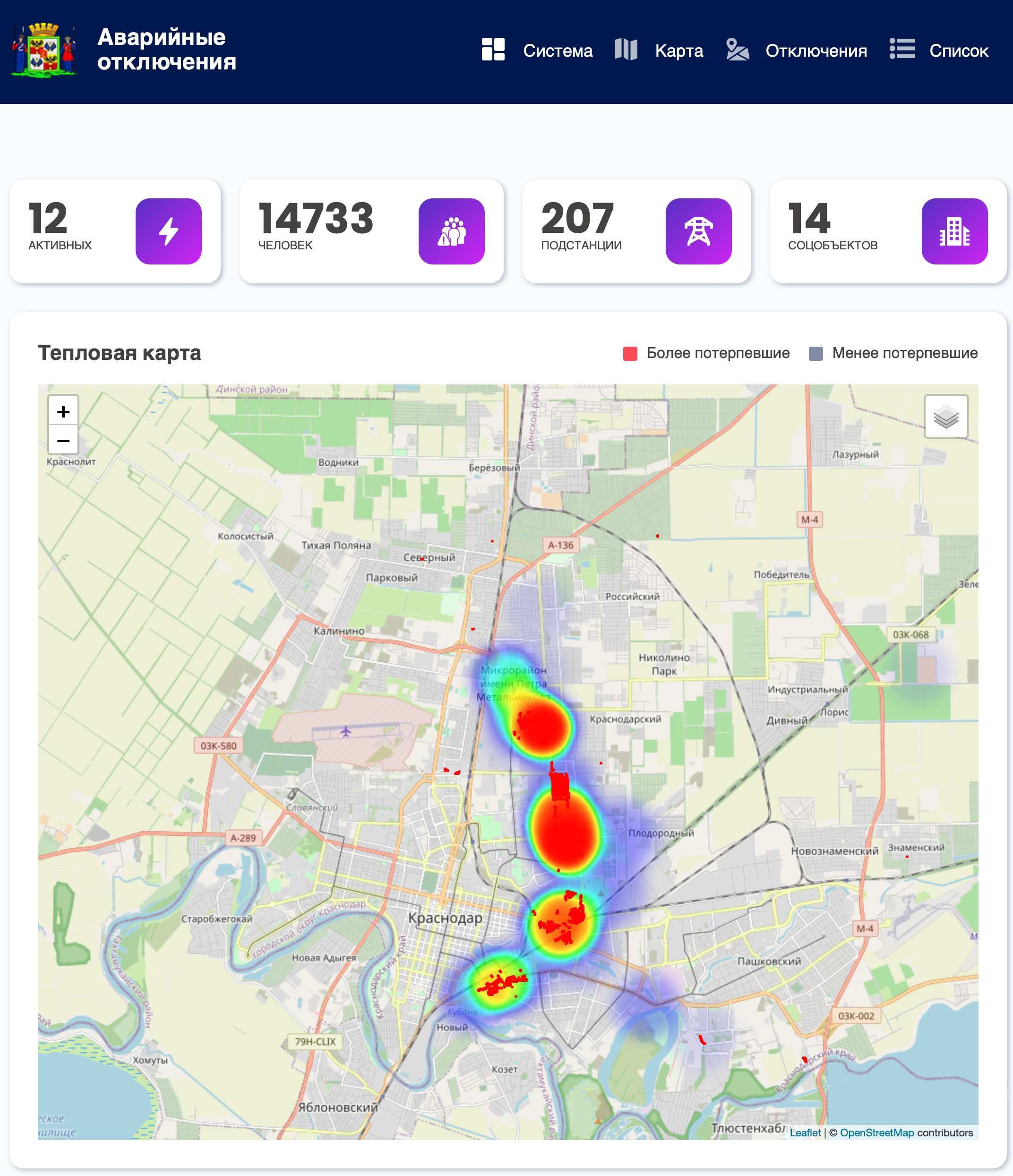
Krasnodar Power Supply Monitoring System
Processes outage alerts (received in text form) and displays them on a heat map. Enables a work log for outages.
My role:
— project idea, project management
— stakeholder engagement
— solved organizational issues (VM allocation, email setup, organizing message ingestion from the utility)
— frontend (50%) — JavaScript, HTML, jQuery, Leaflet
— backend (100%) — Python 3, Django, PostgreSQL, Memcached
— collection, adaptation, and import of source data (~50k objects)
The system currently runs on my resources. It has no analogues in Krasnodar. Unique outage data has been collected, enabling an investment strategy for the utility.
Python 3 / Django / PostgreSQL / Memcached / JavaScript / HTML & CSS / jQuery
Smart Bus Stops
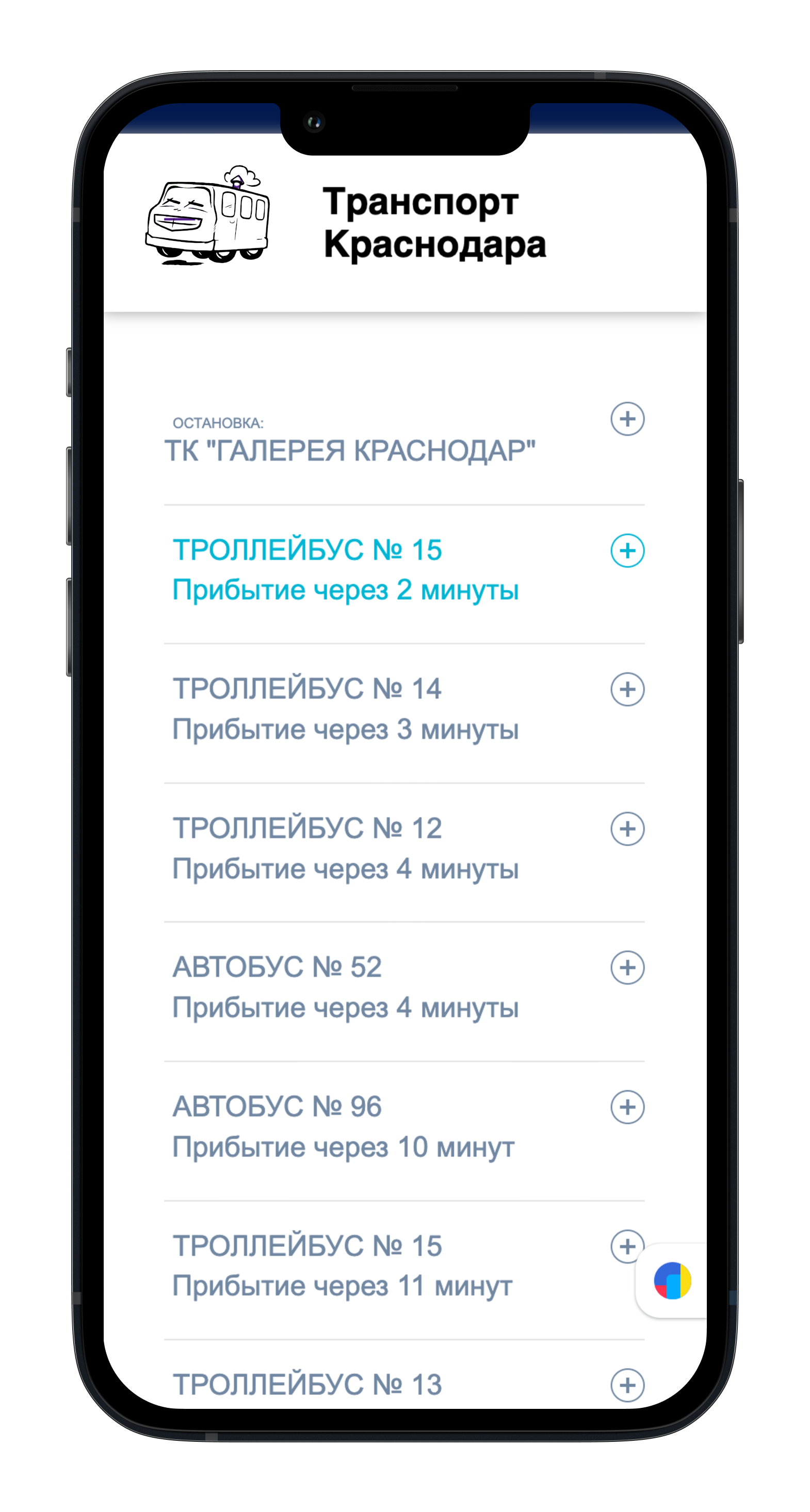
A web app that shows public transport arrival predictions using QR codes posted at bus stops.
Goal: help people see which vehicle will arrive at this exact stop and when, and where it’s heading. Unlike electronic displays costing 100–200k RUB plus 5–10k RUB/month service, a QR code for a stop costs ~200 RUB.
My role:
— project idea, project management
— stakeholder engagement
— frontend (50%) — JavaScript, HTML, jQuery, Leaflet
— backend (100%) — Python 3, Django, PostgreSQL, Memcached
— data collection/cleanup/import, ingesting streams from the navigation system
The system is still in use in Krasnodar.

Python 3 / Django / PostgreSQL / Memcached / JavaScript / HTML & CSS / jQuery
Electronic Pass System
One month before QR codes became mainstream nationwide during the pandemic, I proposed and, together with ER‑Telecom developers, built a prototype system for issuing movement passes, including for private vehicles.
My role:
— concept and system design
— task setting for developers, daily reviews
— presentations for stakeholders
— integrations with government systems (ESIA, internal IS)
The project was one of the first of its kind in the country.
Python 3 / Django / PostgreSQL / Memcached / JavaScript / HTML & CSS
Public Transport Monitoring
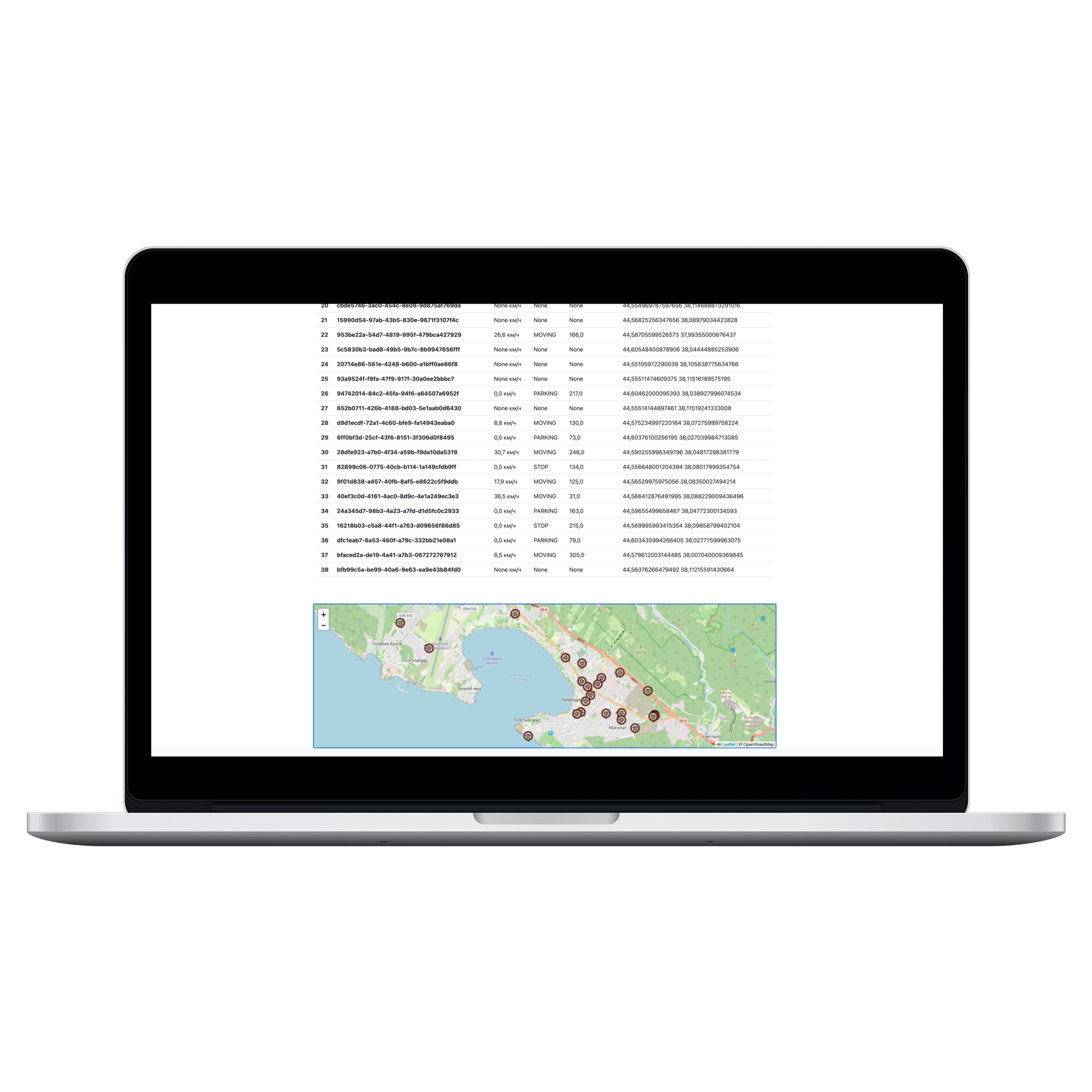
In my free time I continue developing a project to display public transport in Gelendzhik.
Why:
— currently, no public source shows live transport, including Yandex Maps (despite press releases about integration)
— the regional resource has data; via API it’s possible to get routes and municipal vehicles
— the need is acute during the holiday season
At this stage the app can pull regional data for all municipalities (I’ve limited it to Gelendzhik for now),
display vehicle positions, status, and routes. If an operator binds buses to routes (rare), you can see the full route map.
Roadmap:
— auto‑bind a bus to a route based on its track
— once bound, compute ETA to stops
— when ETA works, roll out the QR idea (see project above)